Seminar: the Yiddishe Response to Tragedies

by Yonit Tanenbaum

CROWN HEIGHTS, Brooklyn [CHI] — In the wake of recent tragedies affecting the tight-knit Chabad-Lubavitch community based in Crown Heights, Brooklyn, a seminar was held Wednesday evening to address the Hassidic response to death and misfortune.

A panel of respected mentors and educators addressed the following key topics:
• What am I to think when a tragedy occurs in my community?
• How do I explain tragedy to my family?
• What is my personal responsibility?
• What is our communal responsibility?

Love binds Chassidim to one another, reflected Rabbi Yisroel Deren, co-director of Chabad of Western and Southern New England. “We are all one family,” he said to the crowd of 200 men and women gathered in the Bais Rivkah ballroom. “The Lubavitcher Rebbe, Menachem M. Schneerson of righteous memory, derives great enjoyment from seeing his chassidim truly caring for each other.”

One rabbi pointed out the quality of banding together, as the community has, in the face of hardship. “Chassidus says that ’Love your fellow as yourself’ means that we should love another Jew even more than we love ourselves, and truly feel his pain,” asserted Rabbi Bentzion Krasnianski, co-director of Chabad of the Upper East Side. “Yet it is not enough to be inspired,” he continued. “We must take responsibility.”

At the seminar hosted by Yagdil Torah and sponsored by Yerachmiel and Rivka Leah Jacobson, Krasnianski stressed the necessity to set aside time for Torah learning, a repeated dictum of the Rebbe’s. “Increase in something you are not so careful with,” suggested Rabbi Ahron Dovid Gancz, educator at YTTL in Morristown, N.J.
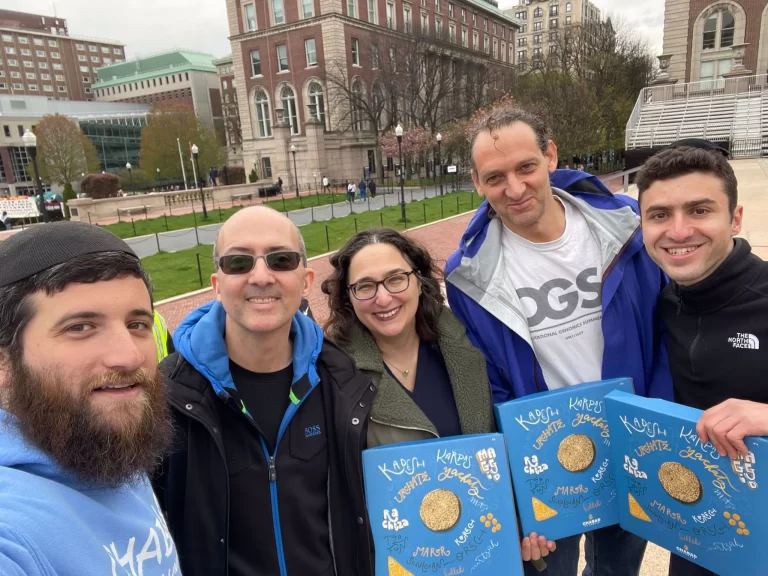

In regard to addressing painful issues with children, Gancz said he believes 90% of troubles to be simply mental hype. He explained that most wounds will heal with time and that there is no need to over-dramatize trauma unless a child calls attention to it on his own.

Every person can take example from Yaakov Avinu’s preparation to meet his brother, Eisav, of gifts, prayer, and mobilizing an army, illuminated Gancz. “We need to strengthen our faith and trust in G-d, we need to do mitzvos and pray to Him to bring Mashiach, and we also need to mobilize our troops.” Knowing how to approach such tragic situations as these is how we combat the trauma, he said.

“We don’t have an answer to tragedy,” Gancz declared, “but who are we to ask? What we can do is demand Mashiach,” he said.